
PayID Casino Alternatives — Other Instant Payment Methods
 Available in AU
When PayID Is Not an Option
I spent a week last year trying to deposit at a casino site that had temporarily suspended PayID deposits due to a compliance audit. No timeline for reinstatement, no alternative fast-track path — just a cashier page with PayID greyed out and a list of other methods I had not used in years. It forced me to re-evaluate the alternatives with fresh eyes, and what I found was that the landscape has shifted more than most players realise. Some methods have improved dramatically. Others have fallen further behind. The closest comparison is PayID vs bank transfer.

PayID works through Australia’s New Payments Platform, which processes over 155 million transactions monthly and has connected more than 128 million accounts. When that pipeline is available, it is hard to beat. But availability is not universal — not every operator supports PayID, not every bank account is configured for it, and there are legitimate scenarios where an alternative makes more practical sense. Understanding what those alternatives actually deliver, stripped of marketing language, is worth the time. The wider context is covered in our PayID casino guide.
POLi — The Direct Banking Option With a Different Engine
POLi has been around since 2006, which makes it ancient by payment technology standards. It works by opening a secure session with your internet banking portal, pre-filling the payment details, and letting you authorise the transfer within your bank’s own interface. The deposit typically credits within minutes, though it is not truly instant in the way PayID is — POLi depends on the bank’s processing schedule rather than a dedicated real-time payment rail.

The advantage of POLi is breadth. It connects to most major Australian and New Zealand banks, which means it reaches players whose banks have not fully integrated PayID or whose accounts are not PayID-registered. The disadvantage is the underlying technology: screen-scraping. POLi logs into your banking portal on your behalf, which some security-conscious players find uncomfortable even though the system does not store credentials. Several Australian banks have also restricted or dropped POLi support over the past few years, citing security concerns with the screen-scraping approach.
For players comparing POLi directly against PayID, the practical difference comes down to speed and reliability. PayID settles in under sixty seconds through infrastructure designed specifically for real-time transfers. POLi settles in minutes to hours depending on the bank, through a workaround built on top of legacy banking interfaces. Both move money from your bank to the casino without an intermediary wallet, but PayID does it with less friction and more predictable timing.
E-Wallets — The Intermediary Trade-Off
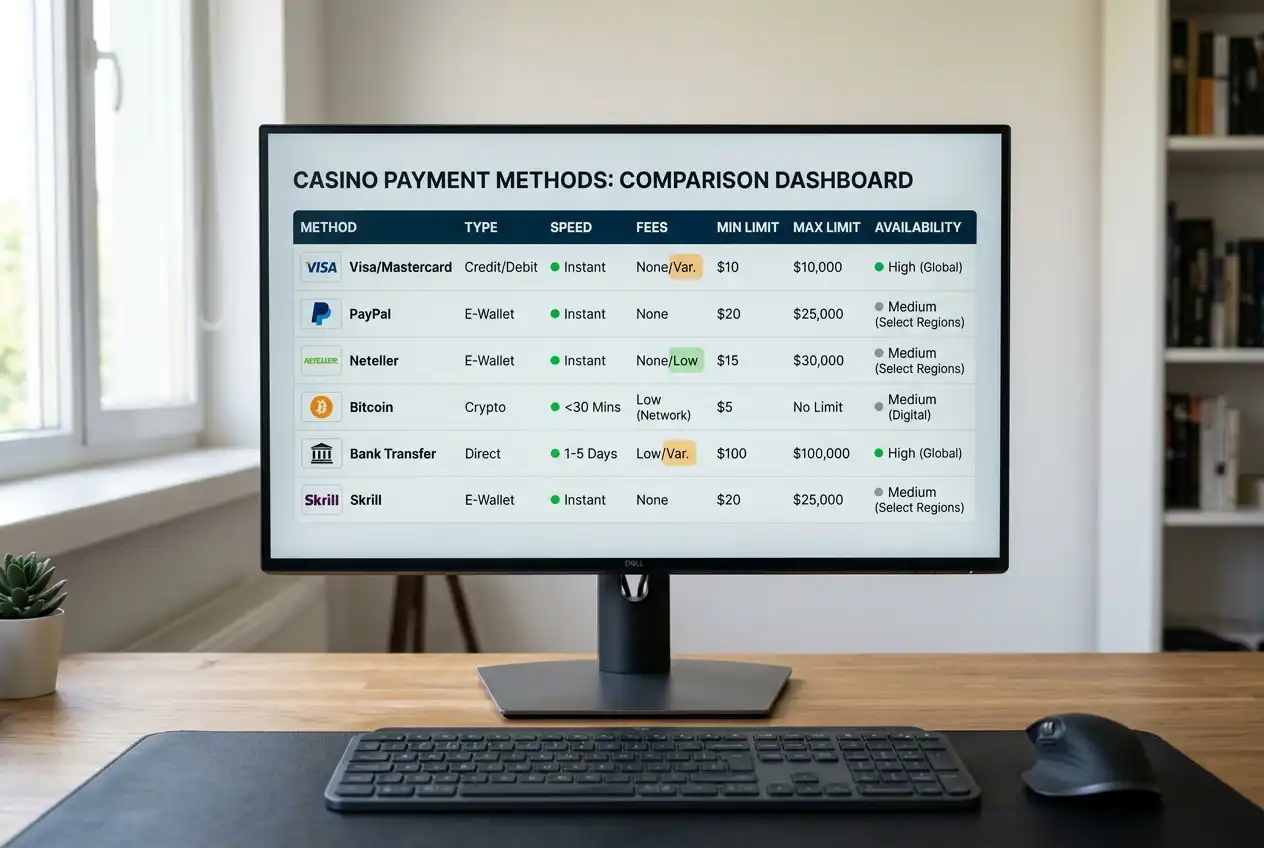
Skrill, Neteller, and PayPal occupy a different position in the payment hierarchy. They are not bank-to-operator transfers — they are intermediary wallets. You fund the wallet from your bank account (which may take a day or two), and then transfer from the wallet to the casino (which is usually instant). The two-step process adds a layer of separation between your bank and the operator, which some players prefer for privacy or bankroll management reasons.
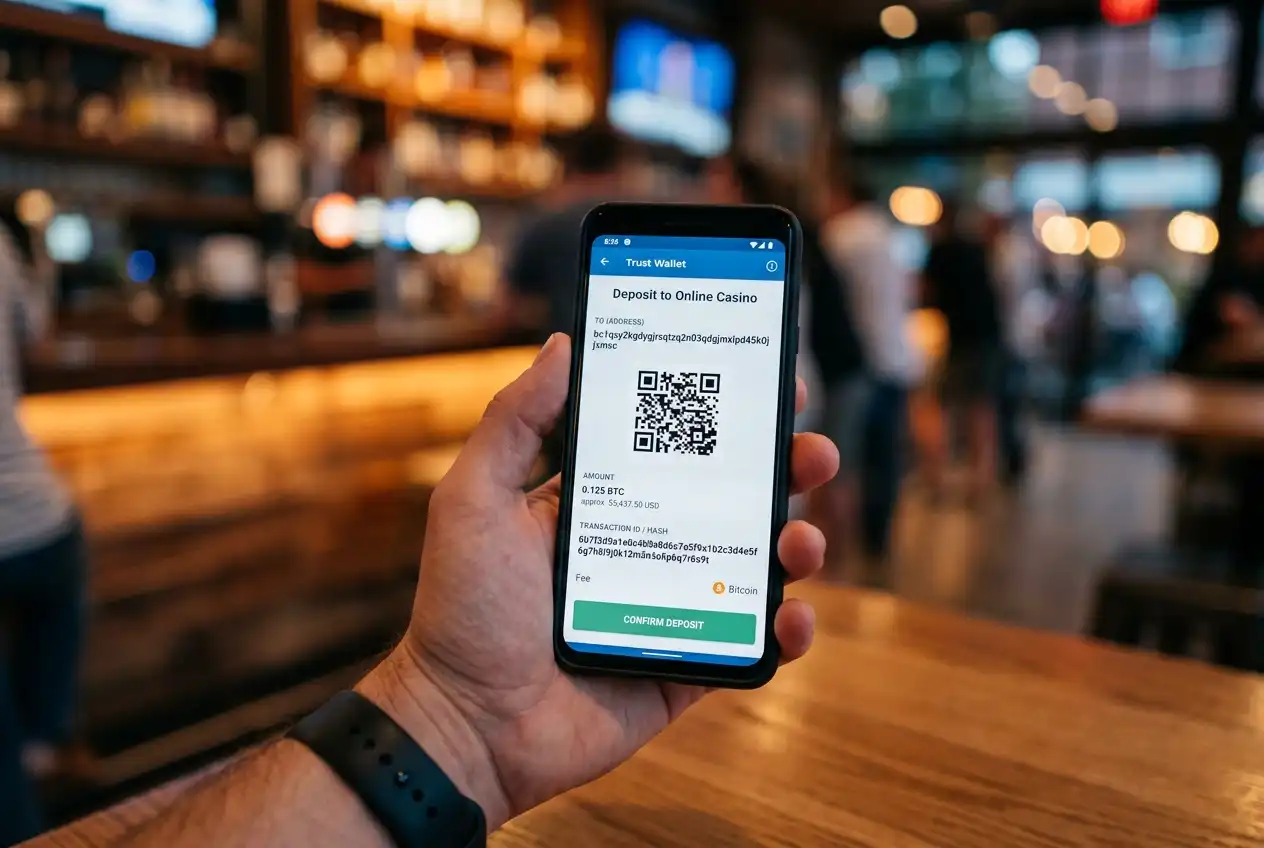
The cost structure tells the real story. E-wallets frequently charge fees for deposits, withdrawals, currency conversion, or inactivity. A 1-2.5% fee on every deposit erodes your bankroll faster than most players calculate. On a AUD 200 deposit made weekly, a 2% fee costs AUD 208 per year — money that does not translate into play time or winnings. PayID and direct bank transfers carry no transaction fees on most platforms, which is a meaningful advantage for regular depositors.
E-wallets do solve one problem that PayID does not: currency flexibility. If you play at a casino denominated in USD or EUR, an e-wallet handles the conversion within the wallet, usually at a better rate than a bank-to-bank international transfer. For purely AUD transactions, though, the e-wallet adds cost and complexity without delivering a corresponding benefit.
Debit Cards — Familiar but Fading
Visa and Mastercard debit deposits remain the most widely accepted payment method at online casinos globally. They work, they are familiar, and every player already has one. But the landscape for card-based casino payments in Australia has shifted since the credit card gambling ban took effect in June 2024, with penalties of up to AUD 247,500 for operators who accept credit card gambling transactions. While the ban targets credit cards specifically, the regulatory attention on card-based payments has made some operators more cautious about debit card processing as well.
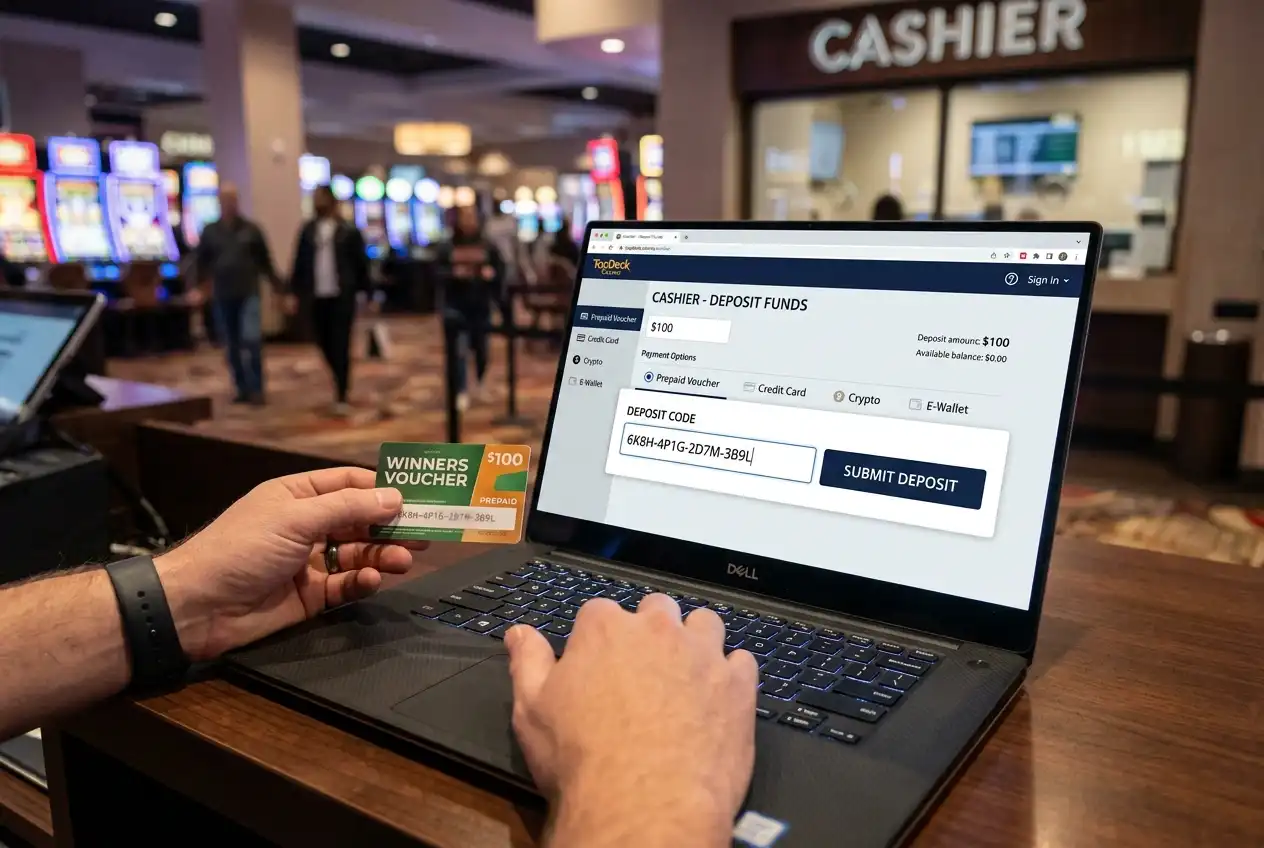
Debit card deposits face a different practical limitation: speed. A card deposit might credit to your casino account within minutes, but withdrawals back to a debit card routinely take three to five business days. That asymmetry — fast in, slow out — is the opposite of what most players want. PayID delivers comparable or faster deposit speed with dramatically faster withdrawals, which is why debit cards have lost ground as a preferred method among Australian casino players who have access to both.
Card fraud adds another dimension. AUD 854 million in card fraud hit Australia in the 2025 financial year, affecting 2.3 million Australians. Every card transaction at an online casino creates a data point that could be compromised in a breach. PayID transfers do not expose card numbers because there are no card numbers involved — the transaction runs through your bank’s authenticated infrastructure, reducing the surface area for fraud significantly.
Bank Transfers — The Slow Reliable Fallback
Traditional bank transfers — BPAY, direct credit, or standard EFT — remain available at most operators and function as the fallback when faster methods are unavailable. The trade-off is straightforward: reliability in exchange for time. A BPAY deposit typically takes one to two business days. A direct credit can take one to three. These are not estimates with wide variance — they are structural delays built into the batch-processing schedule of Australia’s older banking infrastructure.
For players who deposit infrequently and plan sessions well in advance, the delay is manageable. For anyone who values session spontaneity or needs to reload mid-play, bank transfers are not competitive with PayID or even with e-wallets. The one advantage is universality: every bank supports standard transfers, every operator accepts them, and the process has not changed meaningfully in decades. There is comfort in that predictability, even if it comes at the cost of slower withdrawal processing times as well.
Cryptocurrency — Speed With a Different Risk Profile
Bitcoin, Ethereum, and stablecoin deposits have carved out a niche among tech-savvy players and those who prioritise pseudonymity. Crypto deposits can settle in minutes (depending on network congestion and the operator’s confirmation threshold), and withdrawals are often processed faster than any fiat method because they bypass the banking system entirely.

The risk trade-off is volatility and regulatory uncertainty. A Bitcoin deposit that was worth AUD 500 when you sent it might be worth AUD 480 or AUD 520 by the time you withdraw, depending on market movements during your session. Stablecoins mitigate this by pegging to fiat currencies, but they introduce their own complexity — wallet management, gas fees, and a learning curve that is steeper than any bank-based method. For most Australian players whose primary concern is getting AUD into and out of a casino efficiently, PayID solves the same speed problem without the crypto overhead.
Choosing Based on What Actually Matters
After testing every payment method on this list across multiple operators, my hierarchy is simple. PayID first, for speed, cost, and security. POLi as a direct alternative when PayID is unavailable. Debit card as a universal fallback. E-wallets only when currency conversion is necessary. Bank transfers when nothing else works. Crypto for players who already hold it and understand the risks.
The Australian online gambling market sits between USD 5.5 and 6.13 billion in 2025, and that volume flows through every payment channel listed above. Where your money flows through matters less than you might think for the outcome of your session. But it matters enormously for how much of your bankroll arrives intact, how quickly you can access winnings, and how much personal financial data you expose in the process. Those are the axes worth optimising around — not brand names or marketing claims.
Written by the editors at PayEdge.