
Fastest Payout PayID Casinos -- What Determines Withdrawal Speed in 2026
 Available in AU
The Withdrawal That Arrived Before My Coffee
I requested a withdrawal at 7:14 AM on a Tuesday, walked to the kitchen to make coffee, and by the time I sat back down the funds were in my bank account. Seven minutes, start to finish. That was the fastest PayID casino payout I have experienced, and it set a benchmark that most withdrawals do not quite meet. Understanding why that Tuesday morning was exceptional — and what typically slows the process down — is the difference between realistic expectations and frustration.
PayID’s banking infrastructure settles transfers in under sixty seconds. That is the NPP’s contribution to the equation, and it is the one part of the process that works consistently. The variable is everything that happens before the operator initiates the transfer: identity checks, pending period holds, manual review queues, and compliance screening. The “speed” of a PayID withdrawal is really the speed of the slowest step in the operator’s internal pipeline, not the speed of the payment rail itself. The full picture is in our PayID casino guide.
The Three Stages of Every PayID Withdrawal
Every withdrawal passes through three distinct stages, each with its own timeline. Stage one is the request — you enter the amount, confirm your PayID details, and submit. This takes seconds and is entirely in your control. Stage two is the operator’s internal processing: pending period, verification, compliance review, and approval. This ranges from minutes to days depending on the operator, the amount, and whether your account has been fully verified. Stage three is the bank transfer itself — the PayID payment from the operator’s bank to yours — which settles in under sixty seconds once initiated.

The pending period is where most of the delay lives. Operators impose a mandatory hold — typically between one and 48 hours — during which you can reverse the withdrawal and return the funds to your playable balance. This hold exists partly as a responsible gambling measure (giving you time to reconsider) and partly as an administrative buffer for the operator’s finance team. Some operators process PayID withdrawals with zero pending time. Others enforce a 24-hour hold regardless of circumstances. The pending period is disclosed in the operator’s terms, and checking it before you deposit saves the surprise later.
What Actually Slows Down Withdrawals
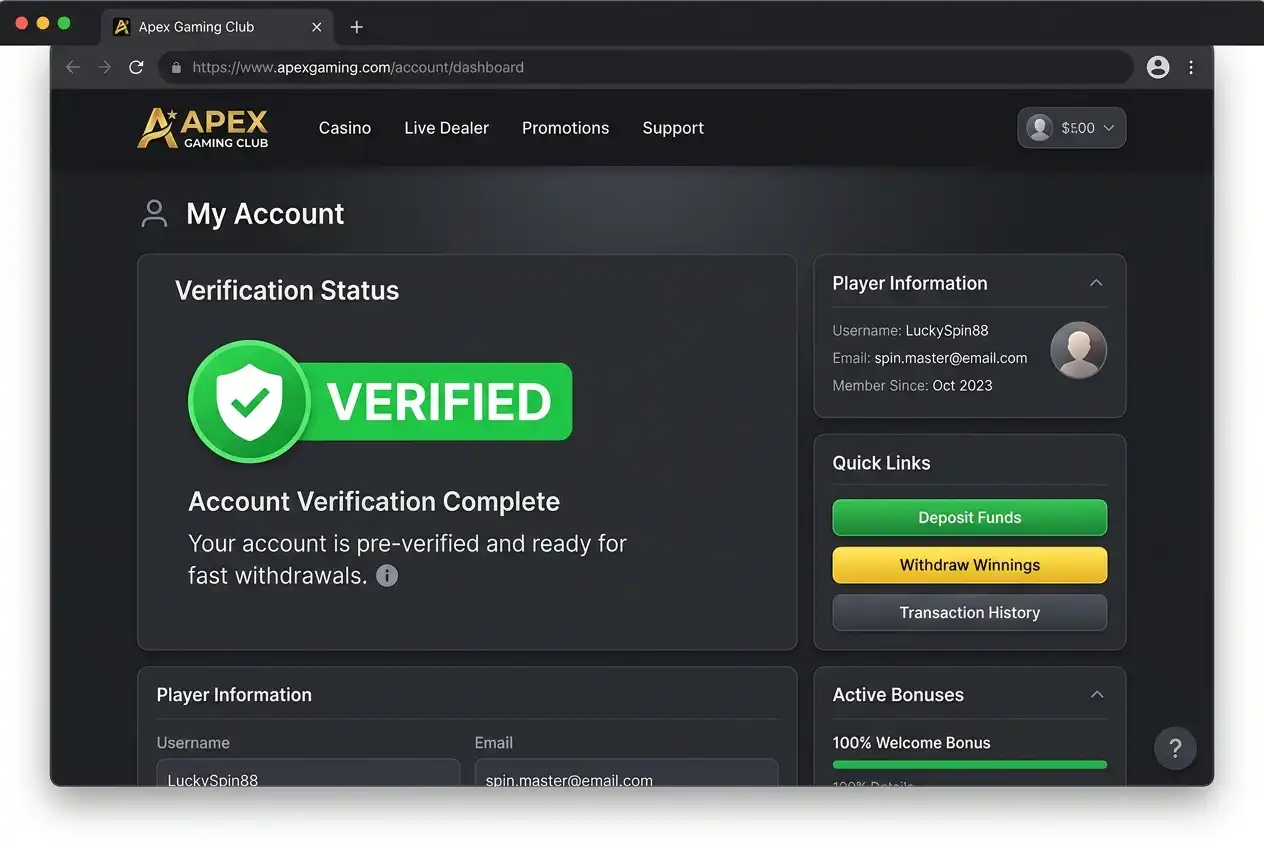
Verification status is the single largest factor. First-time withdrawals almost always trigger a know-your-customer (KYC) review. The operator will request identity documents — passport or driving licence, proof of address, sometimes a photo of the bank statement showing your PayID-linked account. Until these documents are reviewed and approved, the withdrawal sits in a queue. For a well-staffed operator, verification takes a few hours. For an understaffed one, it can take three to five business days.

The time to deal with verification is before your first withdrawal, not during it. Many operators allow you to upload identity documents proactively through the account settings. Completing this step shortly after registration — rather than waiting until you want to withdraw — removes the single most common delay from the process.
Withdrawal amount also matters. Large payouts — typically anything over AUD 5,000, though the threshold varies by operator — often trigger additional manual review. This is an anti-money-laundering obligation, not operator-specific caution. AUSTRAC requires operators to report transactions over certain thresholds, and the compliance team may need to verify the source of funds before releasing the payment. With Australia’s online casino segment generating USD 462.7 million in 2024, the volume of these reviews has increased alongside market growth, meaning processing times for large withdrawals can stretch beyond what smaller cashouts experience.
Weekend and holiday timing create a subtler delay. While the NPP operates 24/7 — PayID transfers settle on Christmas Day the same as any Tuesday — operator finance teams often work business hours. A withdrawal requested at 11 PM Friday might not be reviewed until Monday morning. The banking rail does not rest, but the humans approving withdrawals do.
How to Maximise Your Payout Speed
The fastest PayID withdrawals share a pattern. The player’s account is fully verified before the first withdrawal request. The requested amount falls below the operator’s manual review threshold. The withdrawal is submitted during business hours on a weekday. And the operator has a short or zero pending period for PayID specifically.
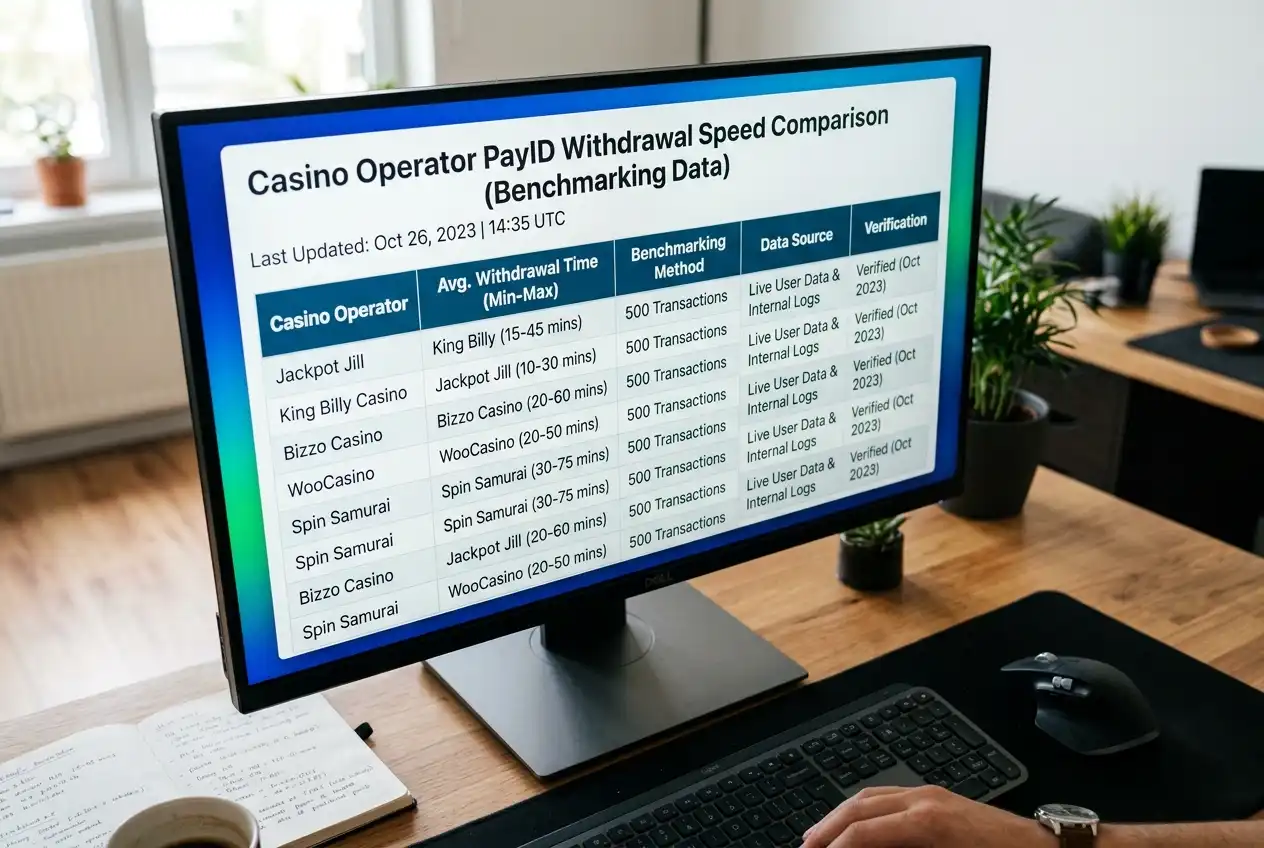
One detail that experienced players know but new players often miss: some operators offer faster processing for same-day withdrawal methods including PayID, compared to other payment channels. This is not because the banking infrastructure is different — it is because PayID’s instant settlement means the operator can release funds without waiting for batch-processing windows that apply to traditional bank transfers. An operator that processes PayID payouts in real time will always beat one that batches them with daily EFT runs.
Lynn Kraus, CEO of APay+, has observed that real-time payment systems are fundamentally changing consumer expectations around financial services. In the casino space, that observation lands hard: once a player experiences a seven-minute withdrawal, anything over an hour feels like a failure, even though it would have been considered excellent two years ago. The benchmark keeps moving, and operators that do not keep pace lose players to those that do.
Realistic Expectations by Operator Type
In my experience across dozens of operators, PayID withdrawal timelines cluster into three tiers. Tier one — under 30 minutes — includes operators with automated payout systems, pre-verified accounts, and zero or minimal pending periods. These are the exception, not the norm, and they tend to be larger, well-capitalised operations that can afford the infrastructure and staffing to process payouts continuously.

Tier two — one to six hours — is where most competent operators land. The withdrawal passes through a standard pending period, receives manual approval during business hours, and is released via PayID the same day. This is a reasonable expectation for a verified account withdrawing a moderate amount on a weekday. The tested numbers are in instant withdrawal.
Tier three — 24 to 72 hours — covers operators with longer pending periods, understaffed finance teams, or manual processes that batch PayID payouts daily rather than processing them individually. A 48-hour PayID withdrawal is not a PayID problem — it is an operator efficiency problem. The NPP could have settled the transfer in 30 seconds if the operator had initiated it promptly. The delay is in the queue, not the pipe.
The broader Australian online gambling market, valued at USD 5.5-6.13 billion in 2025, is large enough that operators compete on withdrawal speed as a differentiator. Players increasingly treat payout velocity as a quality signal — and they are not wrong to do so. An operator that pays quickly is an operator that manages cash flow well, maintains adequate reserves, and invests in operational efficiency. Those are the same qualities that correlate with reliability in every other aspect of the player experience.
Written by the editors at PayEdge.