
PayID vs Osko for Casino Payments — How the Two Relate
 Available in AU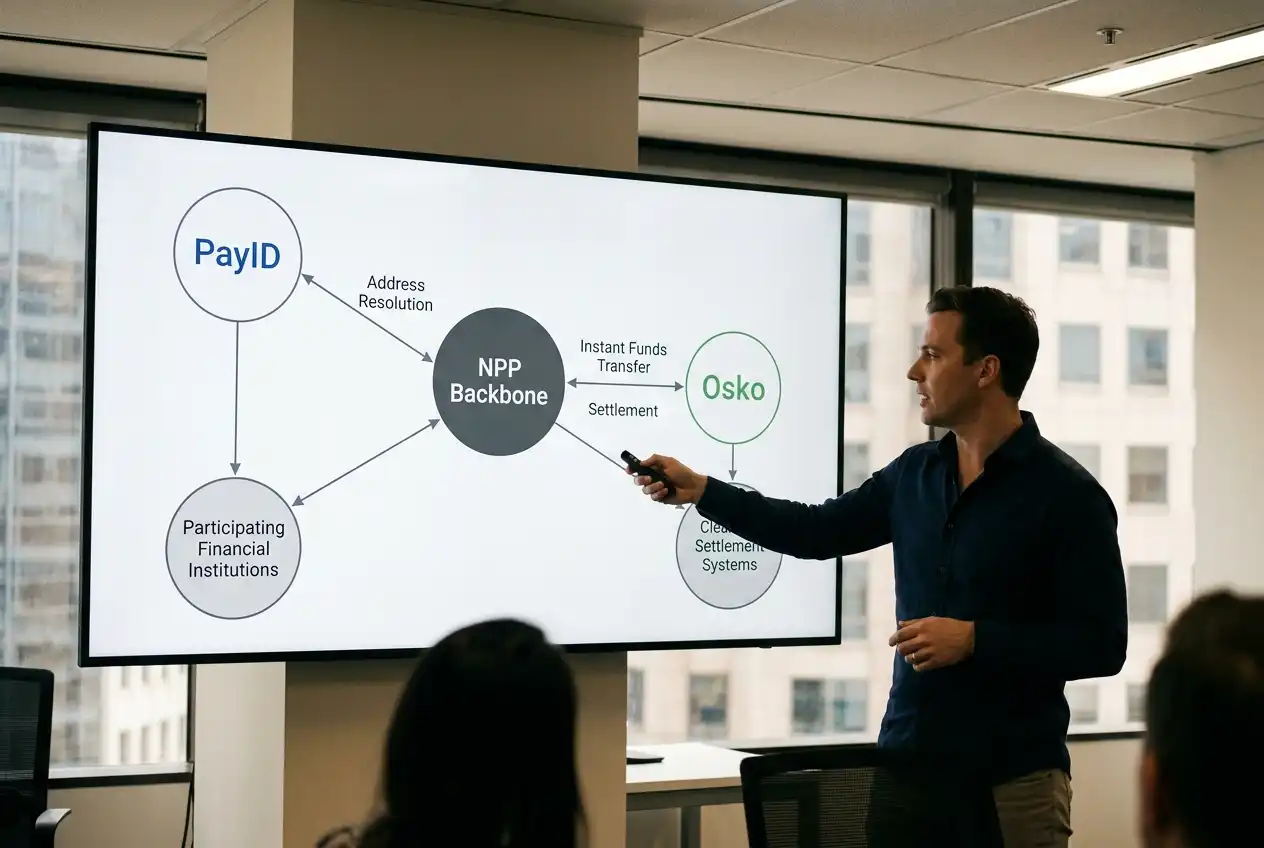
The Confusion That Cost Me an Hour With Customer Support
A casino’s cashier page once listed “Osko” as a deposit method but not “PayID.” I spent an hour in live chat trying to figure out whether my PayID transfer would work. The support agent did not know either — they kept insisting I needed to “use Osko instead.” The conversation went in circles until I simply made the transfer and watched it credit instantly. The deposit worked because Osko and PayID are not competing systems. They are different components of the same infrastructure, and the confusion between them is one of the most persistent misunderstandings in Australian online payments.

If you have ever been unsure whether your casino accepts PayID, Osko, both, or neither, this guide untangles the relationship. The short version: if a site accepts one, it almost certainly accepts the other, because they run on the same underlying network. The longer version explains why this matters for how your deposits and withdrawals actually process. The full picture is in our PayID casino guide.
The Architecture — NPP, Osko, and PayID as Layers
Think of it as a three-layer stack. At the bottom sits the New Payments Platform — Australia’s real-time payment infrastructure, operated by Australian Payments Plus. The NPP is the rail that moves money between banks in real time, 24 hours a day, 365 days a year. In 2025, the NPP processed nearly 2 billion transactions, and it now handles over 35% of all account-to-account payments in Australia. The NPP is not something consumers interact with directly — it is the plumbing beneath the surface.
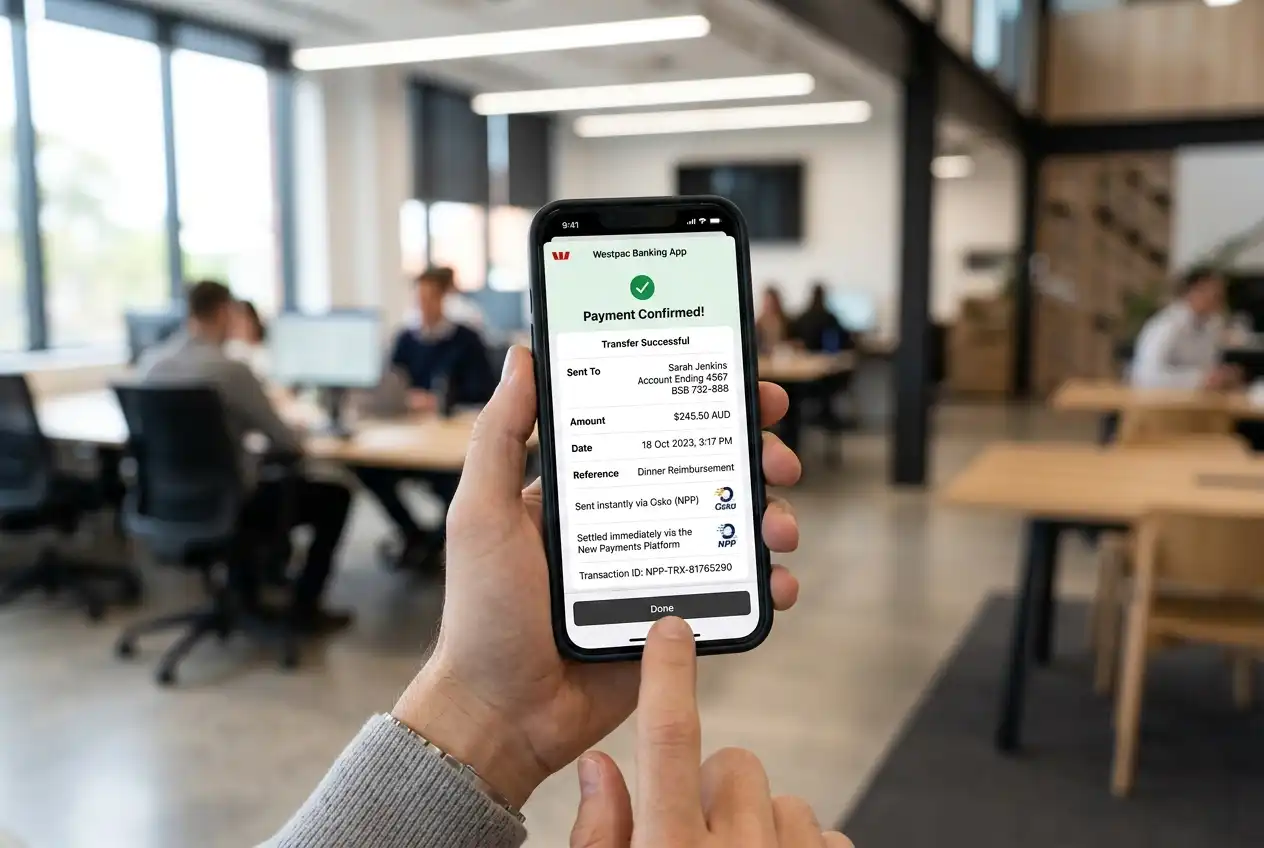
Osko sits on top of the NPP as a payment service — the consumer-facing brand that most Australians encounter when they make a real-time bank transfer. When you send money to someone using their BSB and account number, and the transfer arrives in seconds rather than days, that is an Osko payment travelling across the NPP. Osko is the messaging and clearing overlay that tells the banks how to format, route, and settle the transaction.
PayID is an addressing layer that sits alongside Osko. Instead of entering a BSB and account number, you enter a phone number, email address, or ABN that has been registered as a PayID. The system looks up the associated bank account and routes the Osko payment to the correct destination. PayID is not a separate payment method — it is an alternative way of addressing an Osko payment. Every PayID transfer is an Osko payment. Not every Osko payment uses PayID addressing.
What This Means for Casino Deposits
When a casino says it accepts “bank transfer” or “instant bank transfer” and you make a payment from your Australian bank account that settles in seconds, you have made an Osko payment — whether or not you used a PayID to address it. If the casino specifically lists “PayID” as a deposit method, they are telling you that you can use your PayID identifier (phone number or email) instead of entering their BSB and account number. The money travels the same path either way.

The practical advantage of using PayID addressing over BSB/account number is the name confirmation feature. When you enter a PayID, your banking app returns the registered name of the recipient before you confirm the payment. This lets you verify you are sending money to the correct entity. When you enter a BSB and account number, most banks show only the account name after the transfer is complete — by which time the money has already left. For casino deposits, where you are sending money to an entity you may not have dealt with before, that pre-transfer verification is a meaningful security benefit.
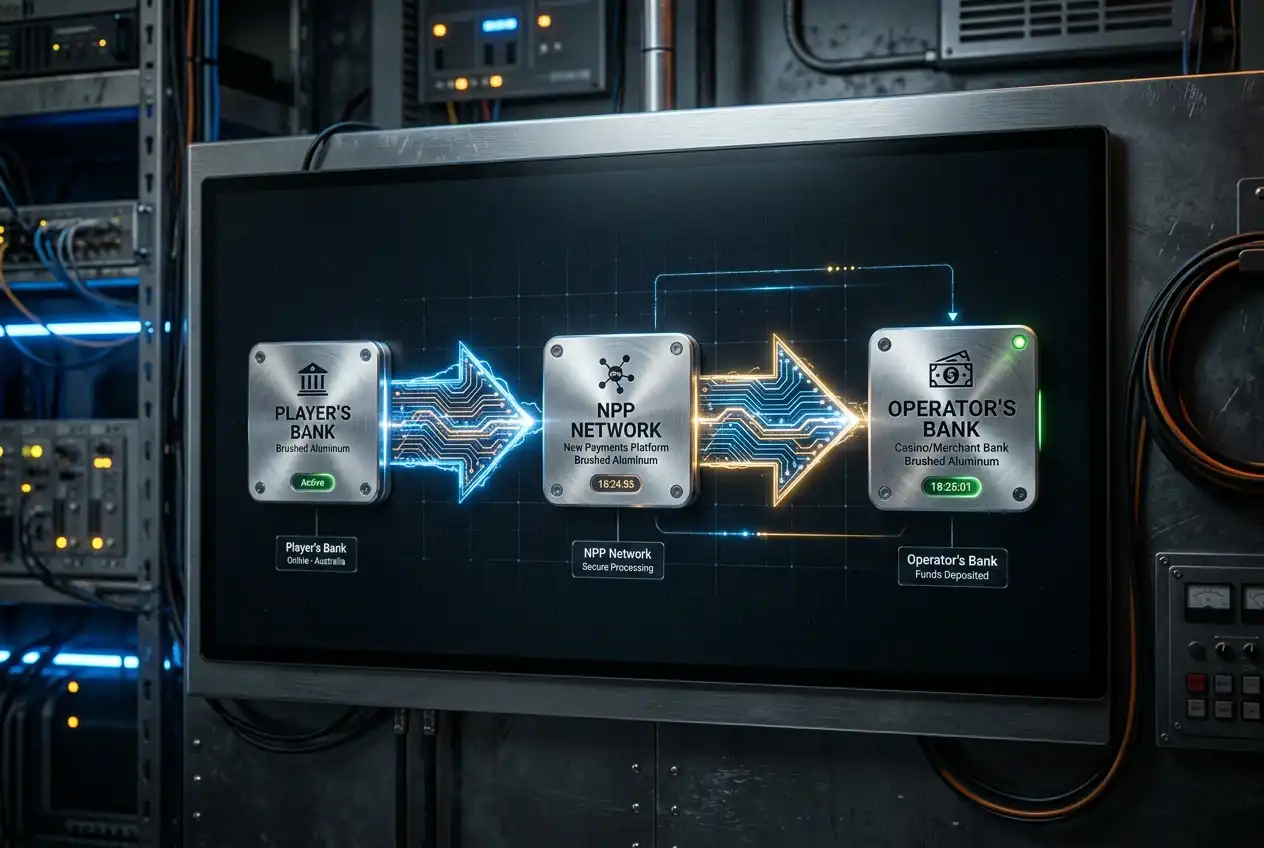
Some casinos display different processing times for “PayID” and “bank transfer” in their cashier — listing PayID as instant and bank transfer as one to three days. This is misleading. If the bank transfer routes through the NPP (which most real-time transfers do), it settles just as quickly as a PayID-addressed payment. The one-to-three-day estimate typically refers to legacy BECS (Bulk Electronic Clearing System) transfers, which use an older, batch-processed rail entirely separate from the NPP. The distinction is between NPP-routed and BECS-routed transfers, not between PayID and “bank transfer.”
PayTo — The Third Layer Most Players Have Not Heard Of
PayTo is the newest service on the NPP stack, and it introduces a capability that neither Osko nor PayID currently provides: merchant-initiated payments. With PayTo, you authorise a business to initiate debits from your account — similar to a direct debit but processed in real time through the NPP. The authorisation is managed through your banking app, giving you visibility and control over which businesses can request payments and under what conditions.
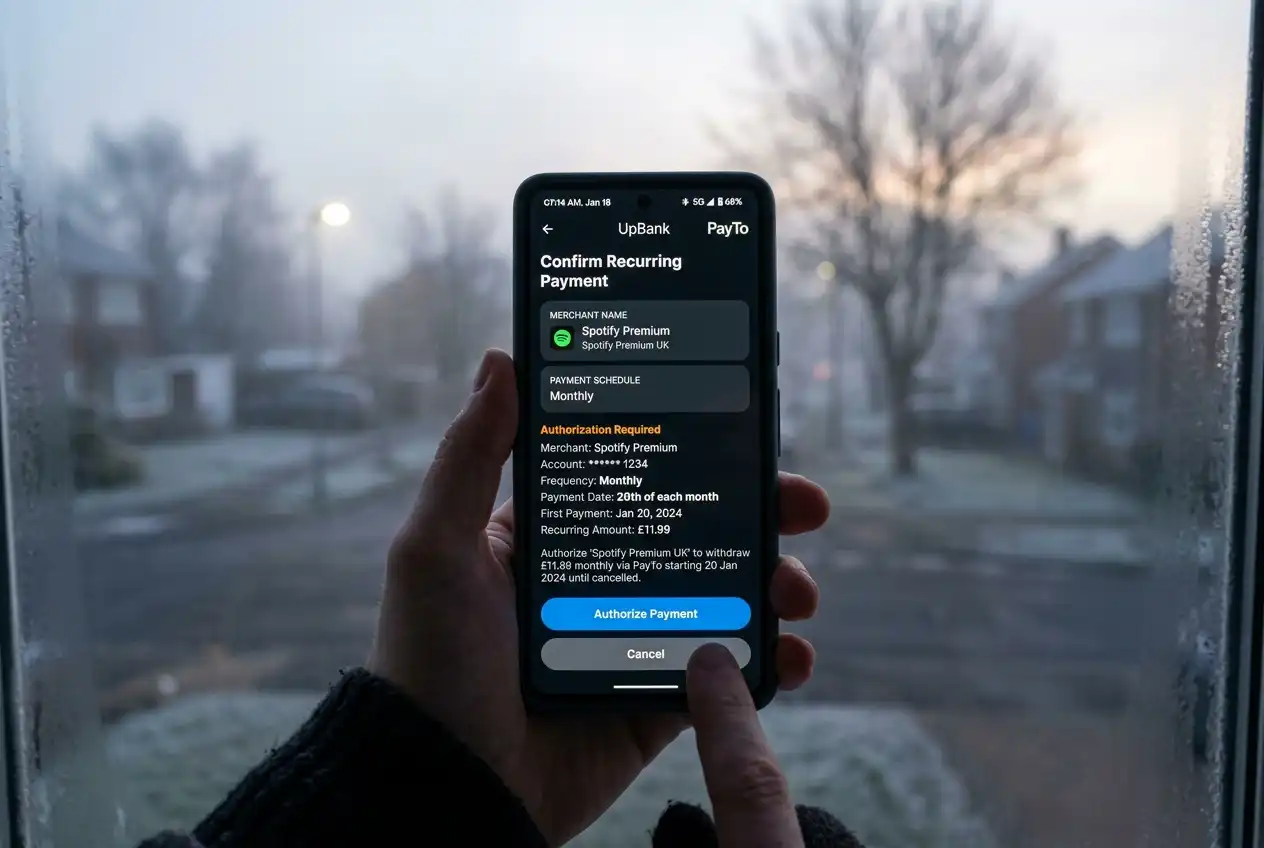
For casino payments, PayTo has significant potential. Instead of manually initiating each deposit through your banking app, a PayTo agreement would let the casino request funds from your account with your pre-authorised consent. You would see the request in your banking app, confirm it, and the payment would settle instantly. This removes the app-switching friction that currently defines the mobile deposit workflow and creates a smoother path for operators to process withdrawals directly to your account.
PayTo adoption is still in its early stages. Most casino operators have not integrated it yet, and consumer awareness is low. But the infrastructure is live, the banking integrations are progressing, and the use case for subscription-style or recurring casino deposits is obvious. Keeping an eye on PayTo adoption is worthwhile for players who want to understand where casino payment technology is heading over the next two to three years.
Which One Should You Actually Use at a Casino
If the casino lists PayID as a deposit option, use PayID. The name confirmation feature adds a security layer that BSB/account-number transfers do not provide, and the process is marginally simpler — entering a phone number is faster than entering a six-digit BSB and eight-digit account number. If the casino lists only “bank transfer” or “Osko” without mentioning PayID specifically, you can still initiate a PayID transfer to their account if you have their PayID address, or use the BSB and account number they provide. The payment settles identically either way. Security follows from that architecture: PayID casino security.
The NPP’s wholesale transaction cost has dropped from $0.39 in 2019 to approximately $0.04 per transaction in the 2025 financial year. That cost reduction has removed any financial disincentive for operators to support PayID addressing — there is no cost advantage to routing through BECS or any other legacy system. If an operator still insists on three-day bank transfers in 2026, the delay is an operational choice, not a technical constraint.
For withdrawals, the distinction matters even less. The operator initiates the outbound payment from their bank to yours. Whether they address it to your BSB/account or your PayID, the NPP processes it in seconds. The primary variable in withdrawal speed is the operator’s internal approval pipeline, not the addressing method used for the final transfer. Focus your attention on the operator’s processing times and verification requirements rather than on whether they label the payout method “Osko” or “PayID.”
Written by the editors at PayEdge.