
Tracking PayID Casino Transactions -- Statements, Disputes, and Record-Keeping
 Available in AU
The Spreadsheet That Saved Me AUD 1,400
Eighteen months ago, I noticed a discrepancy between my banking records and a casino’s transaction history. The operator showed three deposits totalling AUD 1,200, but my bank statement showed four — including an AUD 1,400 transfer that the casino had never credited to my balance. Without the spreadsheet I maintain for every operator I use, that missing deposit would have vanished into the gap between two record-keeping systems. Instead, I filed a dispute with the bank, provided the transaction receipt, and had the funds recovered within eleven days.

That experience crystallised something I had known intellectually but never felt personally: your banking records are more reliable than any casino’s transaction log. The bank’s systems are regulated, audited, and backed by institutional dispute mechanisms. The casino’s records are maintained by the operator, subject to their internal processes, and only as reliable as their bookkeeping. When the two disagree, the bank statement wins — but only if you have been paying attention to it. The wider context is covered in our PayID casino guide.
What Your Banking Statement Actually Records
Every PayID transfer creates a detailed record in your banking history. The entry includes the date and time, the amount, the recipient’s PayID address or account details, any reference code you entered, and the transaction status (completed, pending, or failed). This data persists in your banking records for at least seven years under Australian financial record-keeping requirements, regardless of whether the casino is still operating.

The level of detail varies by bank. Some institutions display the recipient’s registered PayID name alongside the transaction — so you see “Deposit to [Operator Name Pty Ltd]” rather than a cryptic merchant code. Others show only the BSB, account number, and reference. If you use multiple operators, the more descriptive format makes it easier to reconcile your records without cross-referencing every reference code manually.
The NPP processes over 155 million transactions monthly across 128 million connected accounts. Every one of those transactions is logged at both the sending and receiving bank, creating a redundant record that survives even if one institution’s systems experience problems. For casino players, this means your deposit and withdrawal history exists in at least two independent systems — your bank and the operator — plus the NPP’s own clearing records. The data is there. The question is whether you organise it in a way that makes it useful when you need it. Failed transfers leave traces too: payment failed.
Building a Transaction Log That Actually Works
I use a simple spreadsheet with six columns: date, operator, type (deposit or withdrawal), amount, reference code, and notes. The entire log takes about thirty seconds to update per transaction. Over a year, it builds into a complete picture of deposits, withdrawals, net position per operator, and total gambling expenditure — information that is surprisingly hard to reconstruct after the fact if you have not been tracking it.
The “notes” column catches details that do not fit elsewhere: whether a bonus was attached to the deposit, how long the withdrawal took to process, whether any verification was required. These details seem trivial at the time but become valuable when comparing operators or disputing a transaction months later. A note like “withdrawal requested 9 AM Tuesday, credited 11:47 AM” creates a timestamped performance record that no marketing page can dispute.
For players who find spreadsheets tedious, most banking apps now offer spending categorisation and search features. Searching for the operator’s name or PayID address across your transaction history produces a filtered list of every deposit and withdrawal. Exporting this to CSV gives you a pre-built transaction log without manual entry. The export format varies by bank, but CBA, Westpac, NAB, and ANZ all support some form of transaction export through their internet banking portals.
When Transactions Go Wrong — The Dispute Process
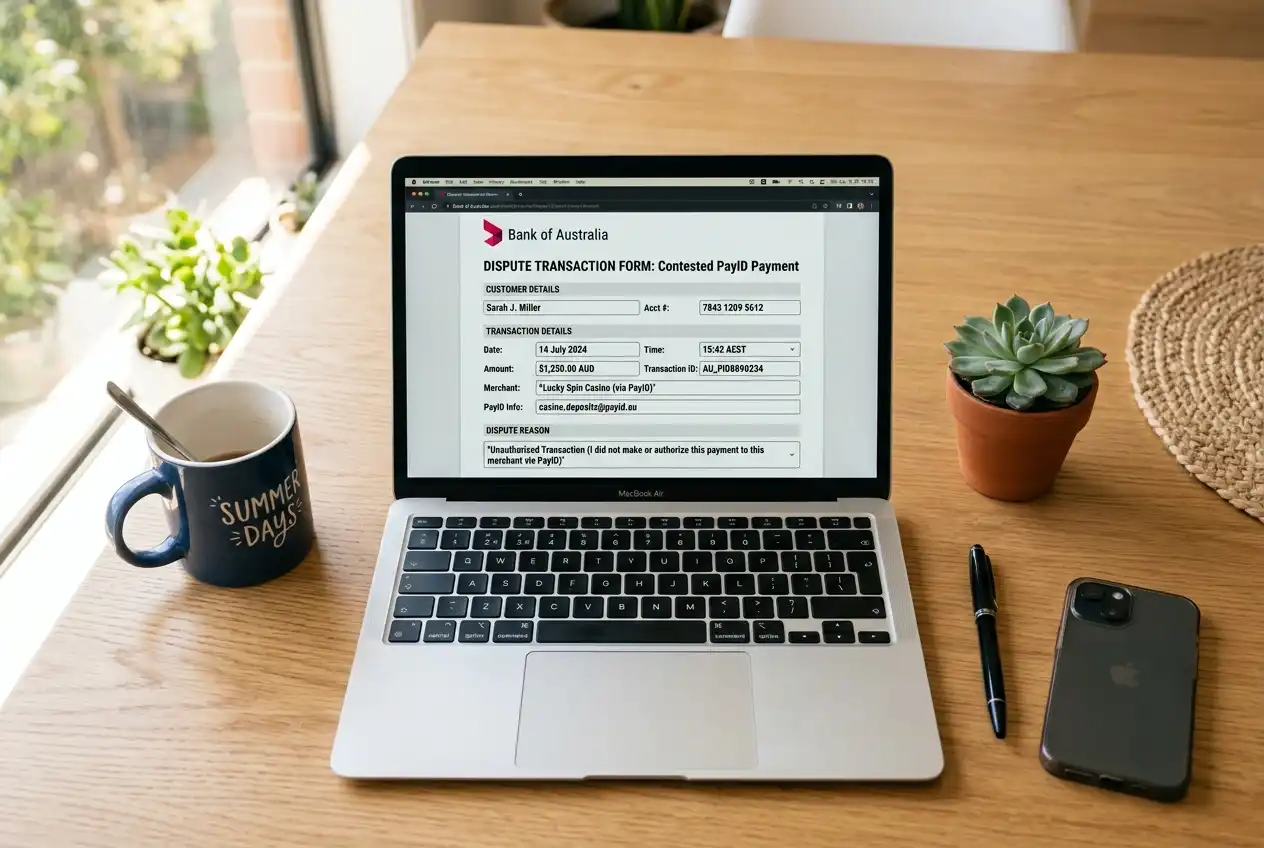
PayID transactions are push payments — you initiate them, and they are irrevocable once the bank processes them. This is different from card payments, where the merchant pulls funds and the card issuer can claw them back through a chargeback. If a PayID deposit credits to the wrong account or the casino fails to acknowledge a valid deposit, the dispute process runs through your bank rather than through a card network.

The first step is always contacting the casino’s support team with your bank transaction receipt. Most missing-deposit issues are reconciliation errors that support can resolve by matching the transaction details to their incoming payment records. If the operator is unresponsive or disputes the receipt, escalate to your bank’s complaints team and request a formal investigation under the ePayments Code, which covers electronic payment disputes in Australia.
Card fraud in Australia reached AUD 854 million in the 2025 financial year. PayID’s push-payment model means the fraud surface is different — you cannot be “charged” through PayID without your explicit authentication — but misdirected payments and unacknowledged deposits do occur. Having a clean transaction log with dates, amounts, and reference codes is the difference between a dispute that resolves in days and one that drags on for weeks.
Privacy and Who Can See Your Transaction History
Your PayID casino transactions are visible to three parties: you (through your banking records), the casino operator (through their payment records), and your bank (through their transaction monitoring systems). Under normal circumstances, no other party can access your individual transaction history. The ATO can request banking data through formal data-matching programs, and AUSTRAC receives reports on transactions above certain thresholds, but neither has routine visibility into individual player-level gambling transactions.

The casino operator sees the incoming payment details — amount, sender name, reference code, and the timestamp. They do not see your account balance, your other transactions, or any financial information beyond what the specific transfer reveals. This is a privacy advantage over payment methods that require you to share login credentials or account details with the operator. PayID transfers keep your financial information within your bank’s security perimeter, sharing only what is necessary to process the specific payment.
One nuance worth noting: the PayID name registered against your account is visible to anyone who looks up your PayID identifier. If your PayID is your mobile number, anyone who enters that number in their banking app’s PayID lookup will see your registered name. This is by design — it allows senders to confirm they are paying the right person. For most players this is a non-issue, but if you prefer to keep your full name separated from your phone number in a gambling context, registering your email address as your PayID instead of your mobile number provides an additional degree of separation.
Monthly Reviews and What They Reveal
Setting aside ten minutes at the end of each month to review your gambling transaction history is the single most effective record-keeping habit I recommend. Not because it catches fraud — though it can — but because it forces a reckoning with the actual numbers. The human mind is remarkably good at underestimating gambling expenditure. The spreadsheet is not.
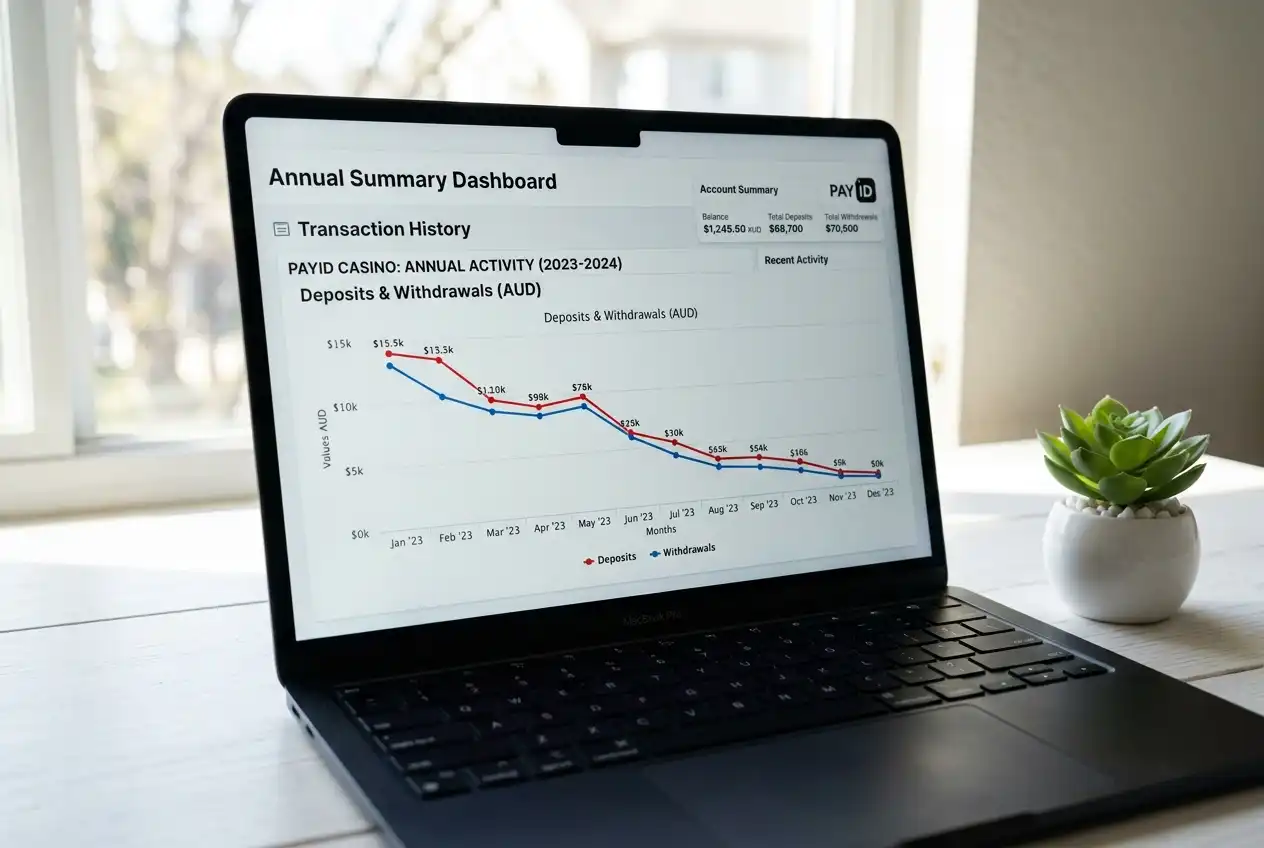
Australians lost approximately AUD 25 billion to gambling in the 2022-23 financial year — the largest per-capita losses globally. A meaningful portion of that loss goes untracked, not because the data does not exist, but because players do not look at it. Your banking statement contains every deposit, every withdrawal, and the net difference between them. That difference is your actual cost of play, and knowing it — really knowing it, not guessing — is the foundation of every responsible gambling framework worth its name.
Created by the "PayEdge" editorial team.