
PayID Casino Security — How Bank-Grade Authentication Protects You
 Available in AU
The Security Test I Run on Every New Operator
Before I deposit a single dollar at any casino site, I run a test that takes about ninety seconds and tells me more about the operator’s security posture than any marketing page ever will. I initiate a PayID lookup — entering the operator’s registered PayID to see the account name that comes back. If the confirmed name matches the operator’s registered business entity, I know the payment endpoint is legitimate and verified through the banking system. If the name does not match, or the PayID does not resolve at all, I walk away. That simple check has saved me from at least three dubious operations over the past two years.

PayID’s security model is fundamentally different from card-based or wallet-based payments. When you pay with a card, you are sharing credentials — a number, expiry date, and CVV — that can be intercepted, skimmed, or stolen. Card fraud cost Australians AUD 854 million in the 2025 financial year, affecting 2.3 million people. PayID transfers share none of those credentials. The payment runs entirely through your bank’s authenticated infrastructure, and the only information the recipient sees is your registered PayID name — not your account number, not your BSB, and not any detail that could be used to extract money from your account. The full picture is in our PayID casino guide.
How Bank-Grade Authentication Actually Works
Every PayID transaction requires you to authenticate through your own bank’s security system before the payment is released. That means your bank’s full security stack — biometric login, PIN verification, two-factor authentication, device recognition — stands between the payment request and the execution. No third party, including the casino operator, ever touches your banking credentials or gains access to your authentication flow.
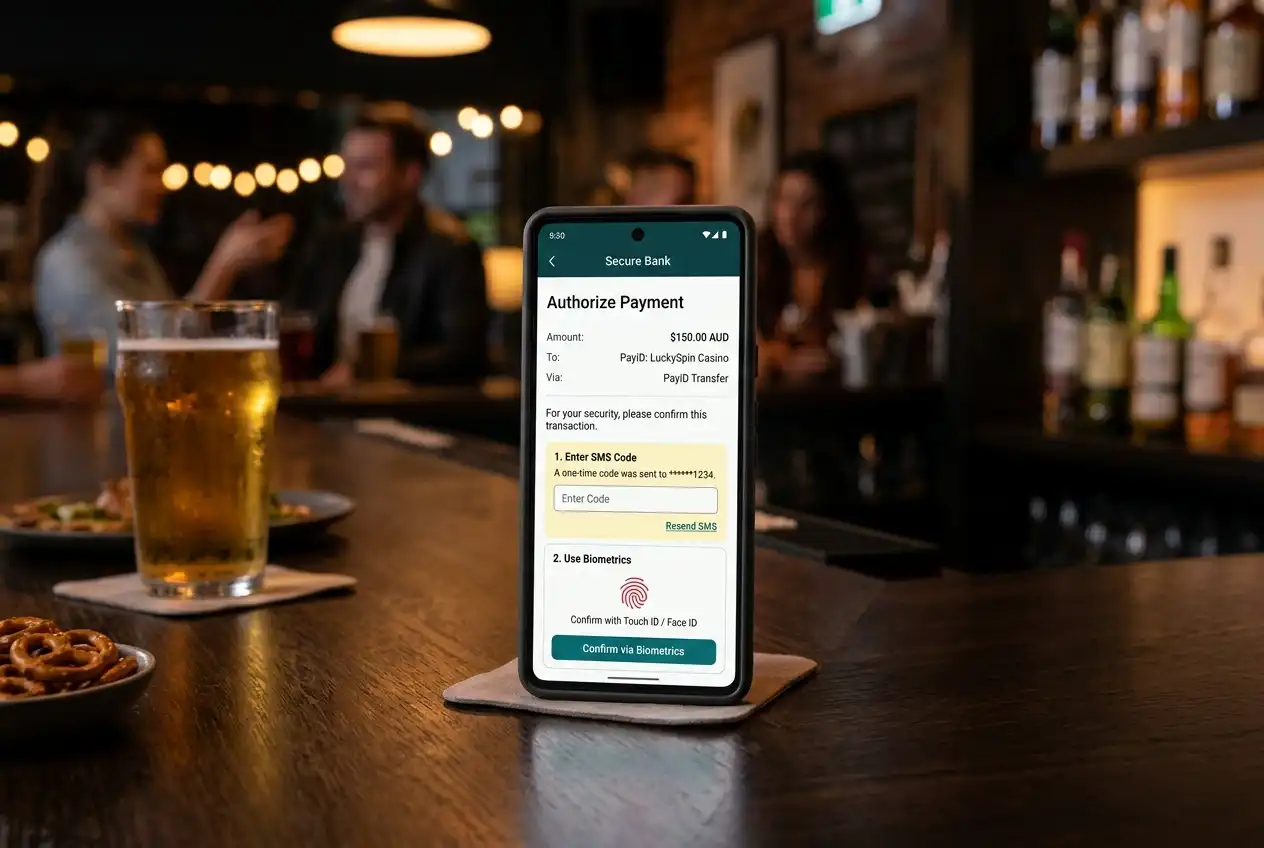
This is a structural advantage over every payment method that requires you to enter financial details on the operator’s website. A card deposit means typing your card number into the casino’s payment form, trusting that their encryption is sound and their systems have not been compromised. An e-wallet deposit means trusting the wallet provider’s security alongside the casino’s. A PayID deposit means trusting your bank — the same institution you trust with your salary, your mortgage, and your savings. The attack surface is dramatically smaller.
The New Payments Platform processes over 155 million transactions monthly across more than 128 million connected accounts. That volume runs through the same security infrastructure that handles salary payments, government transfers, and interbank settlements. The NPP’s security standards are set by the Reserve Bank of Australia and enforced through APRA’s prudential framework. Casino PayID transfers are not processed through a separate, less secure channel — they use the identical infrastructure that moves billions of dollars daily through Australia’s banking system. The fraud data behind it is in is PayID safe.
Name Confirmation — The Anti-Fraud Feature Most Players Overlook
When you enter a PayID address in your banking app, the system returns the registered name associated with that identifier before you confirm the payment. This confirmation step is the most underappreciated security feature in the entire PayID ecosystem. It lets you verify that the money is going where you intend it to go, to the entity you intend to pay, before a single cent moves.

For casino deposits, this means you can confirm the operator’s registered business name before every transaction. If you deposit regularly at a particular site, the name confirmation becomes routine — you glance at it, recognise the entity, and proceed. But if you are depositing at a new site for the first time, or if a site’s PayID details change unexpectedly, the name confirmation is your early warning system. A mismatch between the casino’s claimed identity and the name returned by PayID is a red flag worth investigating before proceeding.
Chris Sheehan, who led NAB’s financial crime unit, has noted that scam patterns frequently exploit payment speed — criminals want money moved before victims can recognise the deception. PayID’s name confirmation feature directly counters this pattern by injecting a verification step that occurs before the payment is irrevocable. For casino payments specifically, it provides a level of recipient verification that card payments and e-wallet transfers simply do not offer.
What PayID Does Not Protect Against
No payment method protects against everything, and understanding PayID’s limitations is as important as understanding its strengths. PayID secures the transaction itself — the movement of money from your bank to the operator. It does not secure your casino account. If someone gains access to your player account through a weak password, social engineering, or credential stuffing, they can request a withdrawal to their own PayID. The transaction would be legitimate from the bank’s perspective, even though the person initiating it was not you.

This means your casino account security is at least as important as your payment security. Strong passwords, two-factor authentication on your player account, and regular review of your transaction history are non-negotiable. PayID makes the payment pipe secure; you are responsible for securing the endpoints.
Social engineering represents another gap. If someone convinces you to send a PayID transfer to a fraudulent account — by impersonating an operator’s support team, for example, and asking you to deposit to a “new” PayID address — the bank will process the payment because you authenticated it yourself. The name confirmation feature helps here, but only if you actually read and verify the name that appears. Rushing through the confirmation screen without checking defeats the purpose of the safeguard entirely.
Comparing PayID Security Against Other Casino Payment Methods
Each payment method carries a different security profile, and the comparison is not always intuitive. Card payments expose reusable credentials. E-wallets add a security layer but also add a third-party system that can itself be compromised. Bank transfers are secure but lack PayID’s real-time name confirmation. Cryptocurrency transfers are pseudonymous but irreversible, with no institutional recourse if funds are sent to the wrong address.

PayID occupies a particular sweet spot: bank-grade security with real-time verification and institutional recourse. If a PayID transfer goes wrong — sent to the wrong account, sent for the wrong amount — your bank can initiate a recall request. The recall is not guaranteed, but the process exists within the banking system’s dispute resolution framework. Card chargebacks offer similar recourse, but the process takes weeks rather than days and involves multiple parties. Crypto transactions offer no recourse at all.
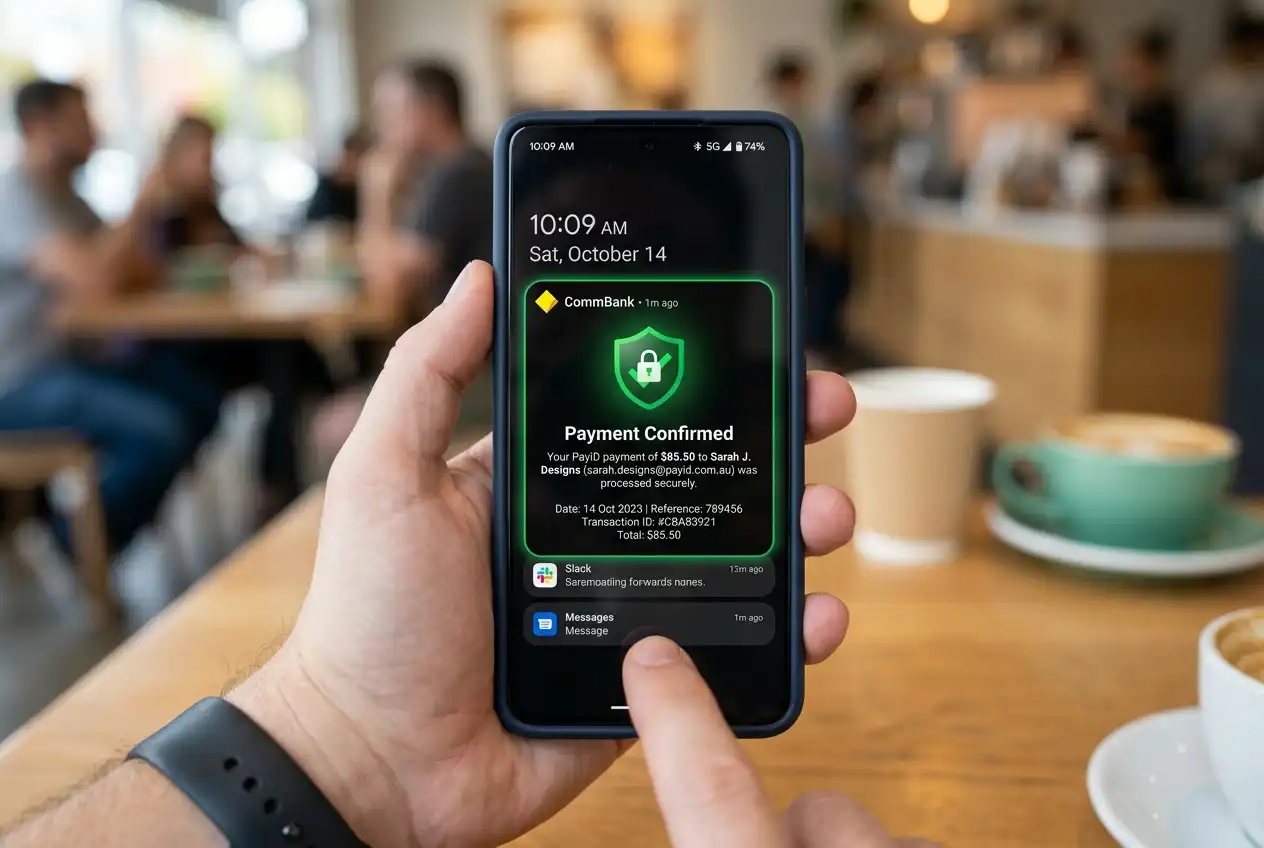
For Australian players specifically, the regulatory environment reinforces PayID’s security advantage. ACMA has blocked over 1,708 offshore gambling sites, and operators serving the Australian market face compliance obligations that include secure payment handling. Using a payment method embedded in the regulated banking system aligns your transactions with the regulatory framework designed to prevent fraud and protect players in this market.
Published by the PayEdge team.